Nonograms for kids: where to start
A nonogram is one of the few logic puzzles a child can finish in a couple of minutes and still have genuinely reasoned their way through. The trick is starting at the right size, and the right size is smaller than most people assume.
Start at 5×5, and start with letters
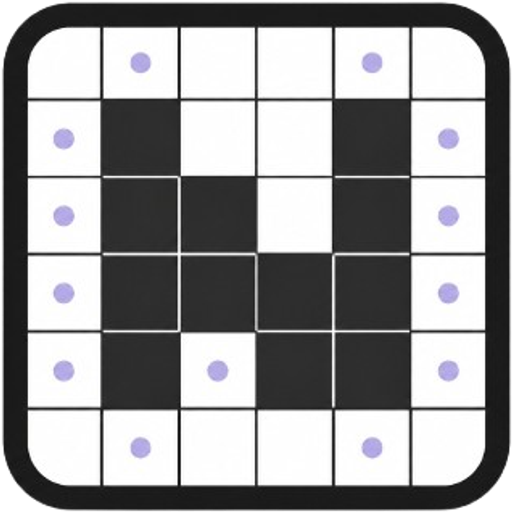
Twenty-five cells is about the smallest grid on which a recognisable picture is still possible, and that turns out to be exactly the right size for a first puzzle. A 5×5 board has ten lines in total — five rows and five columns — which is few enough that a child can hold the whole thing in their head, watch one clue fill an entire line, and follow what that forces in the five crossing lines without losing the thread.
The letters and numbers set is built for this. Thirty-five boards, one per letter A to Z and one per digit 1 to 9, every one of them 5×5 and every one rated easy. They are the only easy-rated puzzles on the site — nothing at 10×10 or above carries that rating — so this is not just the gentlest corner of the catalog, it is the only genuinely gentle one.
Letters have a second advantage that has nothing to do with difficulty: the child already knows what the answer looks like. Recognising a half-finished E is instant feedback that the deductions are heading somewhere real, and that feedback loop is what keeps a beginner going when a picture of an unfamiliar object would just look like scattered squares.
Explaining the rules without a lecture
There are only three things to say, and they are best said one at a time while solving rather than up front. First: the numbers beside a row tell you how many squares in a row get filled in, reading left to right. Second: if there are two numbers, there is at least one empty square between the two blocks. Third: a square has to satisfy both its row and its column, so if you know it from one direction you have also learned it for the other.
That third point is the whole puzzle, and it is worth letting a child discover it rather than stating it. Give them a board where one row is completely full — a clue of 5 on a 5×5 — and let them notice that filling it in tells them something about every single column. Most children get there in under a minute and the idea lands much harder than being told.
The one habit worth insisting on early is marking squares that are definitely empty, with a dot or a small cross. It feels like extra work and it is the single biggest difference between a child who finishes puzzles and one who gets stuck. An unmarked square means "I have not looked at this yet"; a marked one means "I have proved nothing goes here", and without the distinction the same deduction gets made four times.
What a nonogram actually teaches
It is worth being honest about this rather than overselling it. A nonogram is not a maths puzzle in any deep sense — the arithmetic involved is adding small numbers. What it trains is something narrower and more useful: deducing a certainty from partial information, and distinguishing between what you have proved and what you have assumed.
That distinction is the reason guessing is worth discouraging from the first puzzle. Every board on this site has exactly one solution reachable by logic alone, so a guess is never necessary. A child who guesses and gets lucky learns the wrong lesson; a child who is told to find the square they can be certain about learns the right one, and it transfers well beyond puzzles.
The other thing it builds is a tolerance for working on something for a stretch without finishing it. A 5×5 is short enough that this is a very small ask — two or three minutes — which is precisely why it is the right place to start rather than a 10×10 that might not get finished at all.
After the alphabet
When the letters stop taking any thought, there are exactly two other 5×5 boards on the site and they are worth knowing about: a bull in the animals category and a window in everyday objects. Both are rated normal rather than easy, and that is the point — they are the smallest puzzles here that ask you to actually deduce something rather than recognise a shape you already know the name of. They make a good bridge.
After that the step is to 10×10, and it is a real step: four times the area, and nothing at that size is rated easy. Everyday objects is the softest landing, with six 10×10 boards, five of them rated normal and all of them simple household shapes — a bell, a bed, a pair of scissors. Boxy, right-angled subjects keep the early clues forgiving while a child is still getting used to reading them.
For a classroom or a car journey, print them. The solver here exports any grid as a PDF with the clues around an empty board and an optional answer key on a second page, so a sheet of several letters can go in a bag without a screen involved. Solving on paper also forces the empty-square habit, since there is no interface quietly keeping track.
Frequently asked questions
What age are nonograms suitable for?
The 5×5 letters work for most children who can count to five and read a number — often around six or seven. What matters more than age is starting small enough.
Are the puzzles free?
Yes, all of them, and no account is needed. They can also be printed as PDFs at no cost.
Do children need to guess to finish a puzzle?
Never. Every board here has exactly one solution reachable by logic alone, so if a child feels stuck the missing deduction is available somewhere else on the grid.
How long does a 5×5 take?
Usually two or three minutes for a beginner, and under a minute once the notation is familiar.